
Taggat
On a clear night, you can see the kerosene lamps flickering from small wooden fishing boats close to the edge of the horizon. Beneath the starlit sky, the imposing silhouette of the legendary Apo Lakay-lakay looms above the calm and quiet sea.
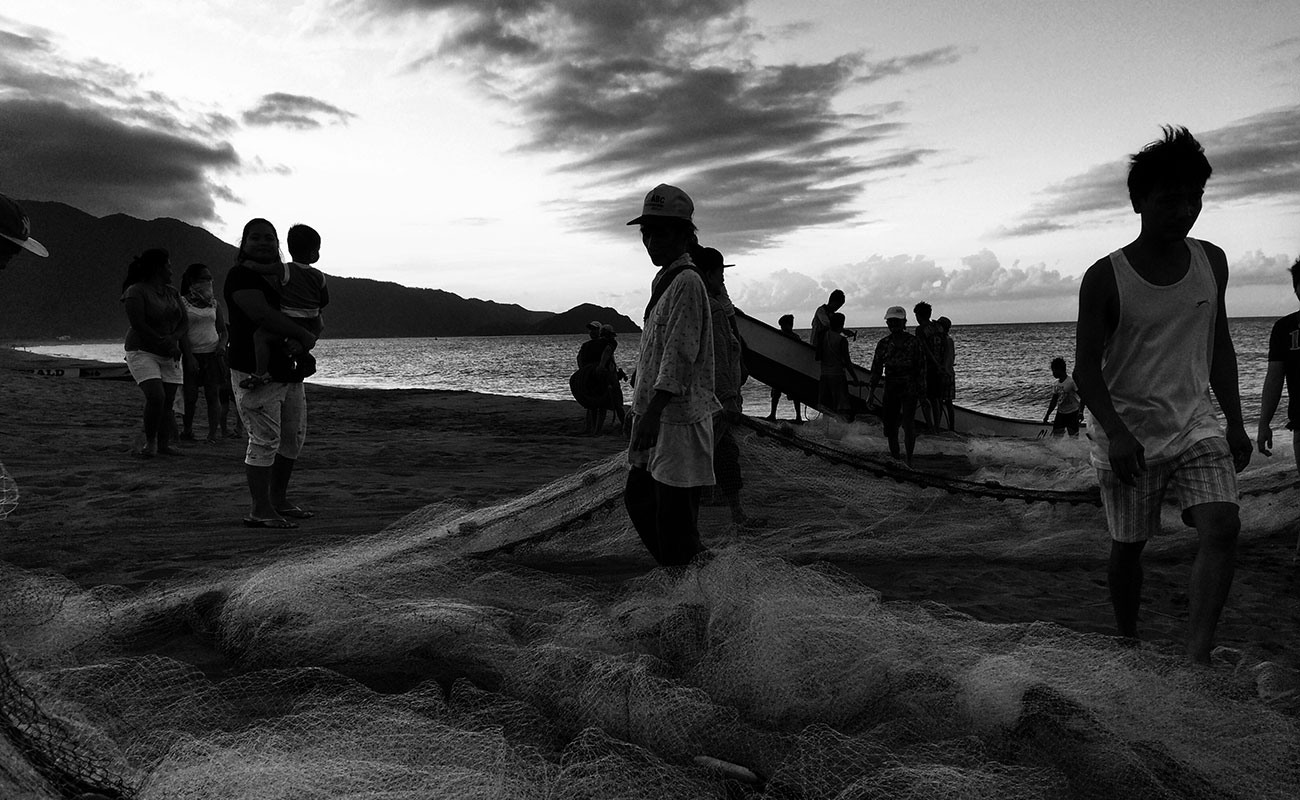
Taggat, a sleepy fishing barrio in Claveria that lies on the northernmost tip of the archipelago, roused from its slumber when a yellow all-terrain vehicle, its front doors removed, roared and plowed through its dusty, unpaved road. When the thick cloud of dust cleared, and the engine fell silent, a man alighted from the vehicle. Tucked beneath his arm was a finely rolled paper. The fishermen who were drinking gin while mending their nets caught sight of the man and started walking towards him. The women, balancing the morning catch on their heads, rushed to offer the man all the fish in their bañera at a bargain. The crowd began to swell as more and more people from nearby barrios heard the news and came.
A school of flying fish buzzed overhead like silver arrows. They lingered a while before darting back to sea.
In a strange accent, not native but coming from a nearby foreign shore, the man handed over the rolled paper to the crowd and ordered them to unroll it. The sea kept watch—growing jealous of the attention paid to the stranger—while the fisherfolk slowly unfurled the paper, tugging both its ends in opposing directions. Maysa…dua…tallo! The sun was already cooling down when they were halfway through it. Maysa…dua…tallo! The paper blanketed the whole of Taggat, spanning farther across the shallow waters of Mabag Isle to the north, and far deep into the hinterlands of Marag to the south. When finally the paper was fully spread out, it revealed drawings so skillfully executed, diagrams so precisely measured. And in the dying embers of the sun, you could glimpse the bold, unmistakable markings printed across the bottom of the sheet: “TAGGAT INDUSTRIES, INC.“.
~ ~ ~ ~ ~ ~ ~ ~ ~ ~ ~ ~ ~ ~ ~ ~ ~
!PACDAAR!
Maiparit iti sumbrek ditoy!
~ ~ ~ ~ ~ ~ ~ ~ ~ ~ ~ ~ ~ ~ ~ ~ ~
Towards the approaching dawn, the sea was growing rough. Waves kept rocking the wooden boat. Suddenly, the unsteady boat shifted to one side, flinging everyone and everything aboard into the turbulent sea. Fish broke free from the nets and swam deep into calmer waters. But the angry sea would not harm the men. It buoyed them back into the arms of their anxious wives.
They have angered the sea. It would shift the tide and push the daclis (net fishing) season to an end. With their stash of salted burador (flying fish) almost depleted, these men of the sea traded their precious oars, nets, and hooks for a daily wage. Day and night they toiled for the man in the sawmill. And as they labored, they sang about their plight. Their plaintive voices would float into the night and lull the newborns to sleep even before their tiny lips could curl around their mother’s nipples.
But these menfolk were made for the sea, so when she beckoned, they waded into her bosom and would never be seen again.
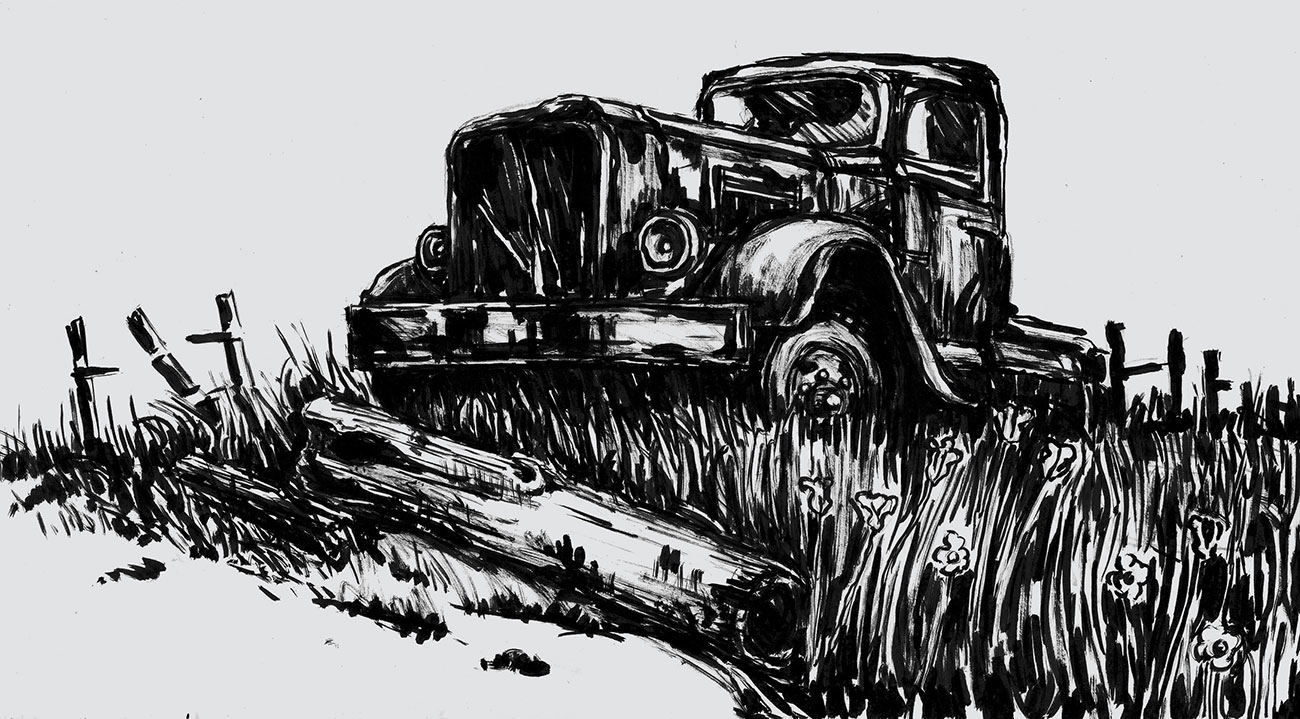
The old man who had just left the south, took the midnight bus that was headed north. The journey would take about 16 hours, covering a distance of 380 miles, traversing mountains and valleys. He arrived amidst a heavy downpour from the monsoon. The red orange mud had soaked his newly polished boots. Inside the small house at the back of the sawmill, the man handed him a set of keys. With great pride, he eased aboard the Kenworth logging truck that would take him deep into the forest of Marag.
Over the years, thick layers of mud would pile under his boots. During his long walks in the forest, seeds of different trees got stuck in the wedges of his soles, and soon enough, began to bud. A little forest had emerged beneath him. But the rapid deforestation of Marag would soon outpace the growth of the saplings. His heart heavier than a log, the old man rolled down from the cold, misty mountain.
Deep in the forest where the last remaining big trees had stood their ground against the incursion of man and machine, you could hear once more the song of the andidit (cicadas).

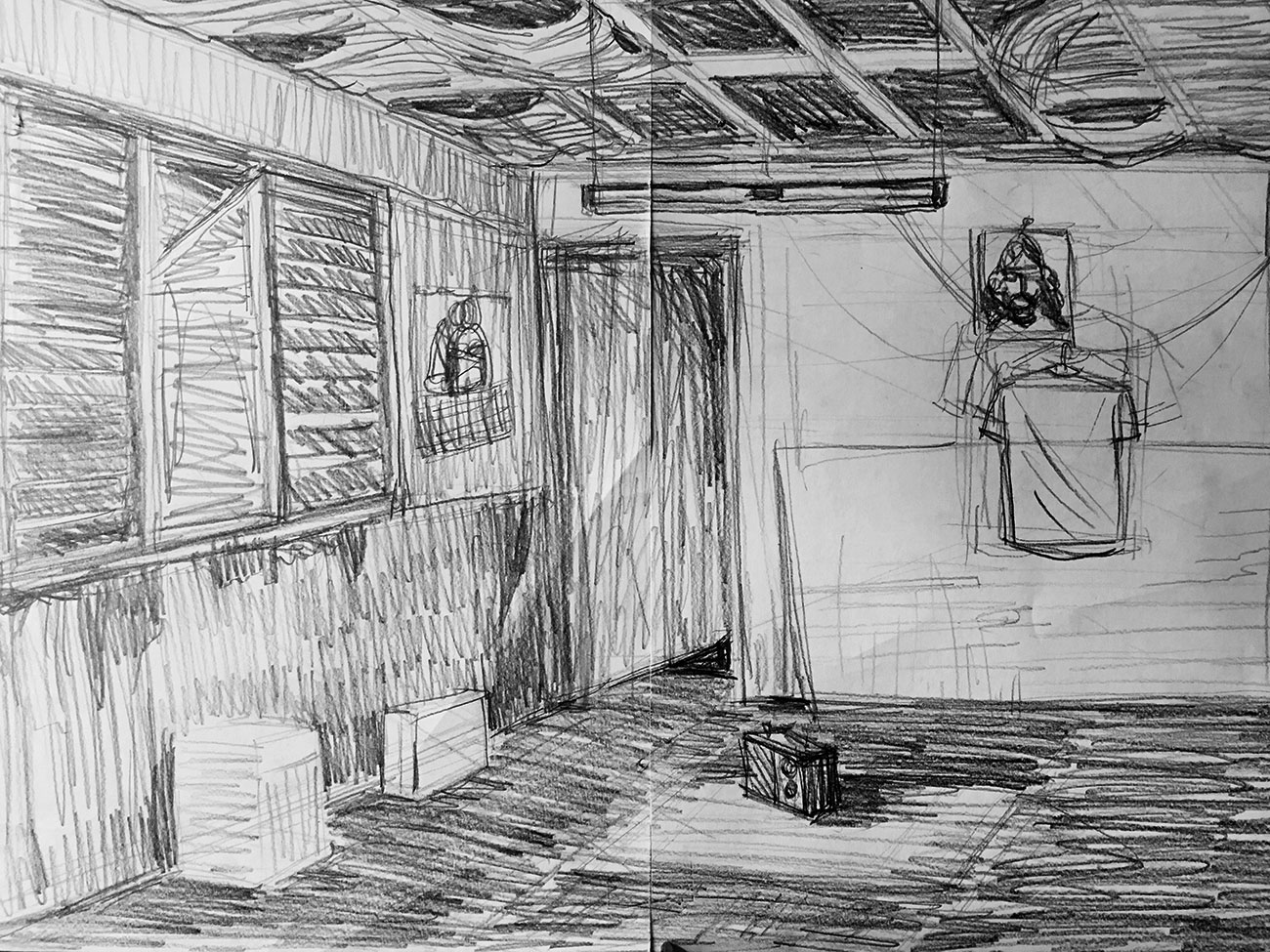
‘Twas in this damp and cold place, amid the monsoon, I took the old man’s pen from the drawer and scribbled on a piece of paper. The ink rushed out of the nib like torrential rains descending from the mountains. It crawled into the crevices of the old wooden house, clung around the legs of the stools squeezed under the small dining table, and clambered at the top, sending the neatly stacked porcelains sailing across the flooded comedor.
Upstairs, the rooms were littered with old photographs and unread letters, chest drawers emptied of their precious clutters. The wind was relentless. The windows rattled and the walls swayed. A congregation of lizards, their faith hanging on a thin thread, took refuge beneath the wooden altar. You could hear the squeaking of the wooden beams and the clanging of metal sheets as the roof was being shaken and torn apart. One by one, as if their lives were entwined, lizards and nails slid from their grip and met their fate.
Ink poured into the holes where the nails had slept undisturbed for years, it gushed upward and turned everything pitch-black.
Taggat was engulfed in darkness. Laborers blindly fought their way out of the sawmill. As they headed towards the exit, they secretly loaded their bicycles with wood trimmings to be used as firewoods. Mothers wailed as they rummaged the kitchen for charcoals to fire their dalican (clay stoves). Children, unmindful of what befell the barrio, ran toward the thick columns of mulberry trees.
The wind was restless and so was the sea. Together they sung the saddest song Taggat would never hear again.
Out of nowhere, a voice called: “Engineer! Engineer!” The old man hurried to open the door. I heard murmurs—a sense of urgency unmistakable in their voices. The old man then groped for his hard hat, raincoat, then slipped out into the night.
Alone, I laid down with my back pressed hard against the plywood the old man had crafted in his younger years. With no roof above, the night was an ocean of infinite darkness peering down on me.
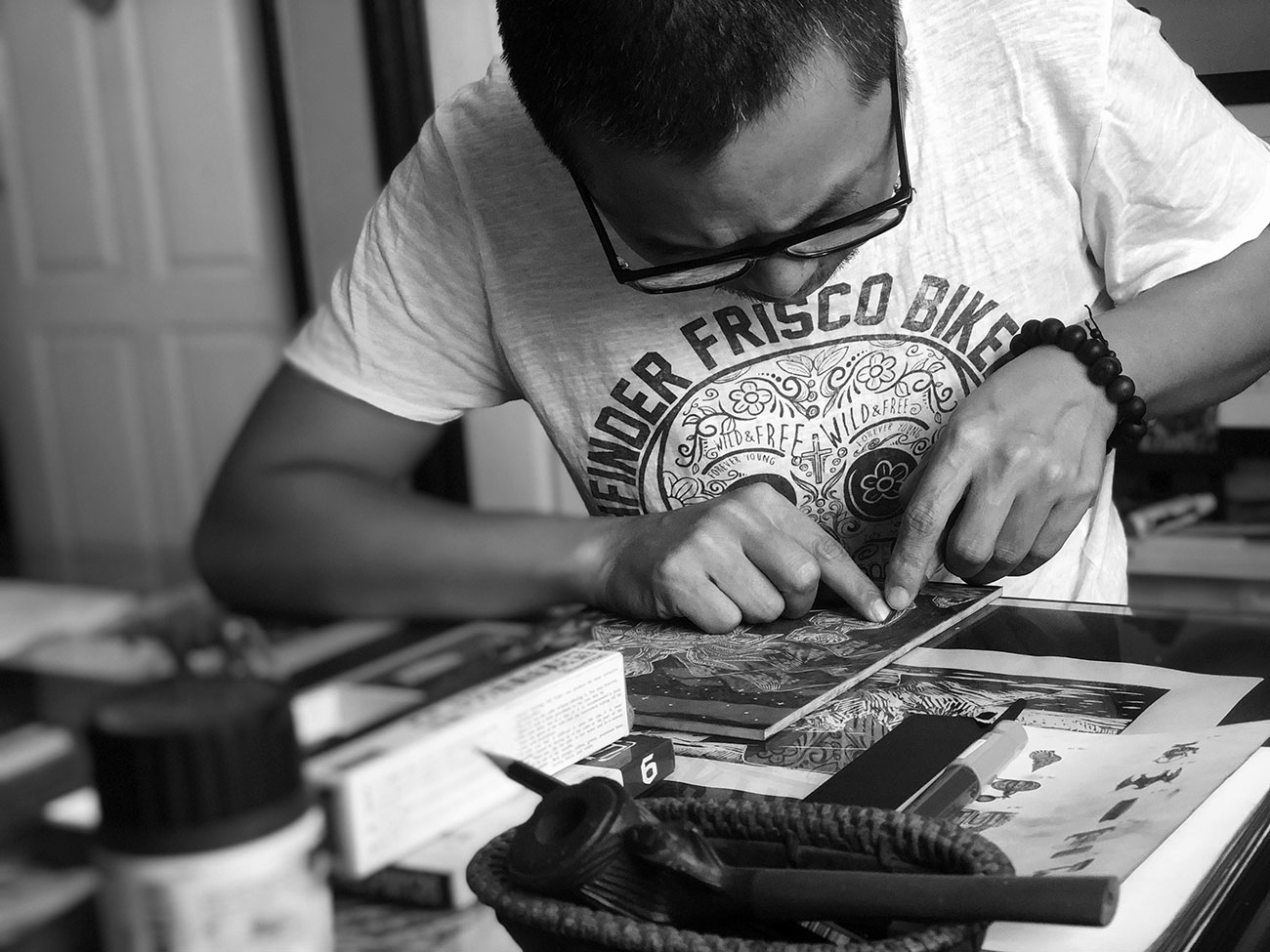
I dipped my finger into the night and slowly drew the mountain that smelled of ripened labig. I drew the many huts that were cobbled together from scrapped lumbers and trimmings. Illuminated by lamps, they seemed like fireflies glowing along the creek at the foot of the mountain. I drew the rocks of Fuga and Camiguin that were visible to the eye when the tide was low. Along the shore, I drew the people whose faces I would always remember, and the people whose names I would never forget. I drew until my finger was as black as the night.
I heard the old man enter the door.
I closed my eyes and one by one the stars came out.
Sika ti rabii nga sapsapulek
Dayta langitmo nga nap’no iti bituin
Dayta raniag ti bulanmo nga umis-isem
Sika ti rabii nga pumukpukaw iti iliw
Dayta anginmo nga agar-arasaas
Dayta ulimekmo nga agik-ikis
20 Jun 2015 – 11 Nov 1927
Boy Scout Makiling/Adopted son of Taggat